Pumice
Pumice Improves Soil Aeration and Drainage for Root-Heavy and Arid Plants
Pumice is a naturally occurring porous stone formed from volcanic activity, and it’s one of the most effective and sustainable ways to improve soil aeration, drainage, and moisture balance. Whether you’re working with succulents, cacti, or large root systems, this lightweight soil amendment boosts structure and airflow in a way that organic matter alone cannot.
At Sybotanica, we source high-quality, coarse pumice that adds both form and function to your soil. Its long-lasting structure won’t compact or break down over time, making it the ideal choice for plants that require dry spells between watering. You can use it as a potting mix additive, a decorative top layer, or even as a clean terrarium element.
What Is Pumice, and Why Is It So Effective?
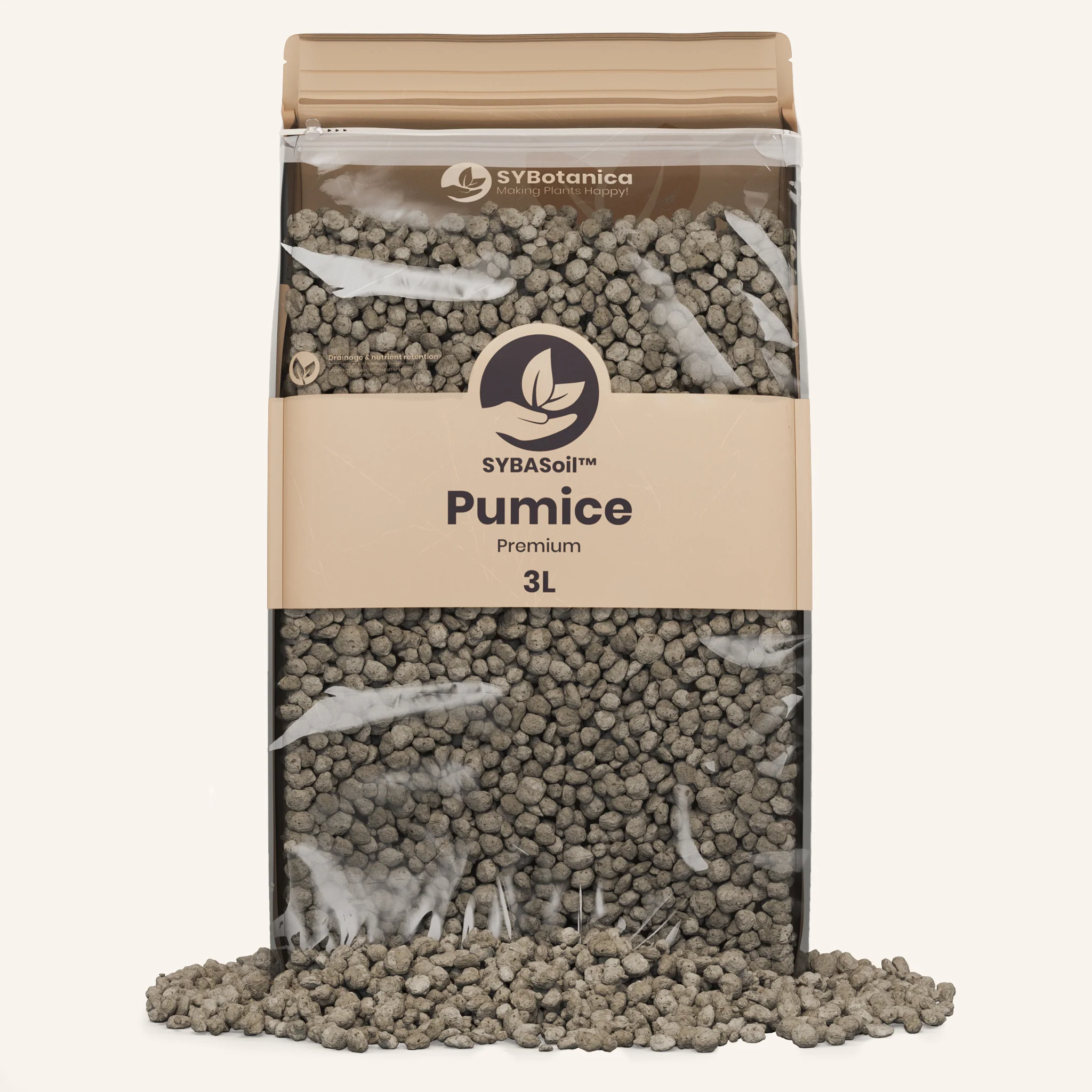
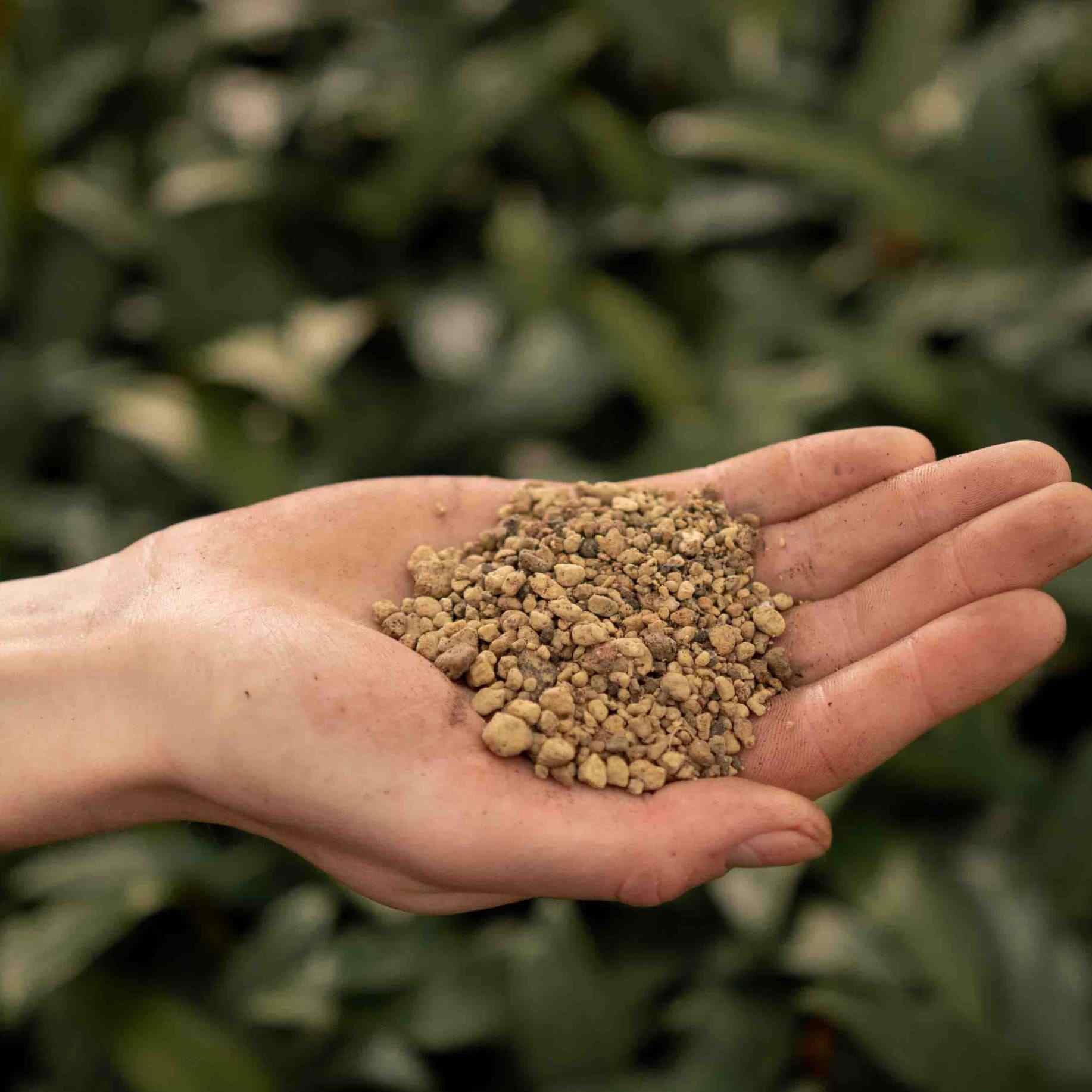
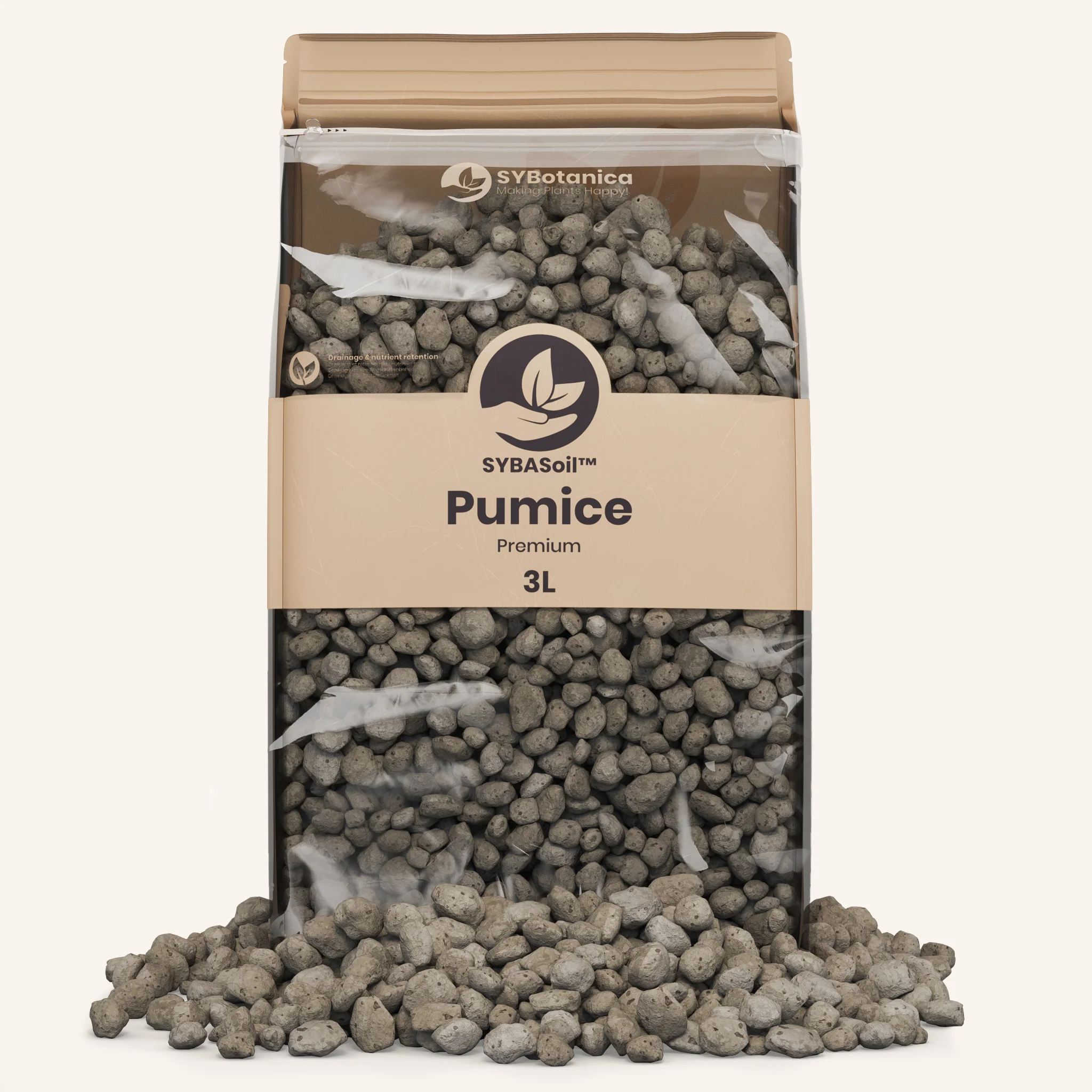
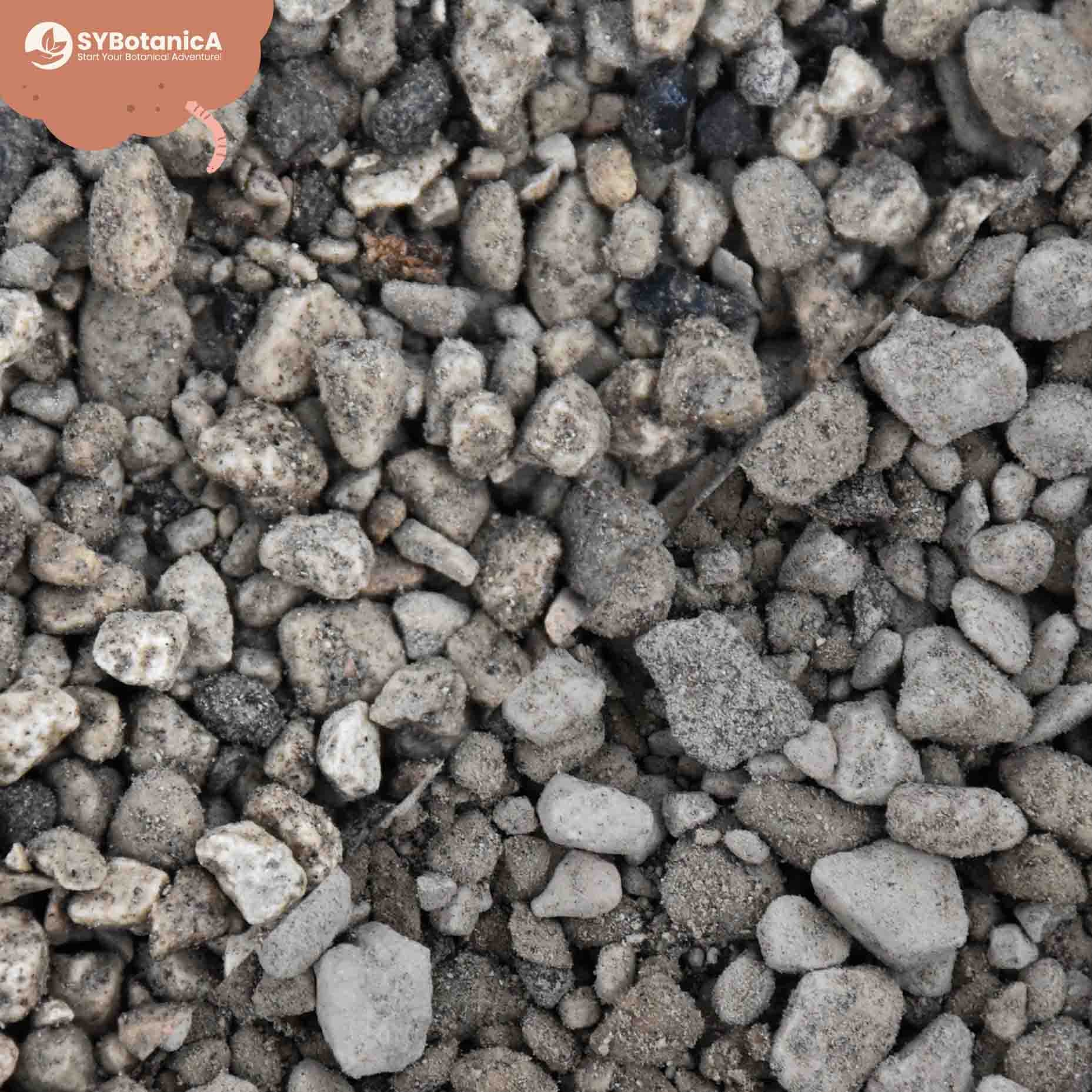
Pumice is a volcanic rock that’s light enough to float on water and porous enough to absorb and redistribute moisture slowly. It contains countless tiny cavities that store water and air, creating the perfect conditions for root oxygenation and moisture control. Its gritty texture also helps break up dense soils, making it invaluable for indoor plants prone to root rot or compacted substrates.
Benefits of Using Pumice in Plant Care:
- Enhances drainage improvement in heavy or moisture-retentive mixes
- Boosts root health with consistent aeration and airflow
- Retains moisture without causing soggy conditions
- Provides long-term structure that doesn't decompose
- Safe for all houseplants, especially succulents, cacti, and tropicals
- Doubles as a natural, decorative lightweight aggregate for top dressing
Whether you’re working with epiphytes in a bark-heavy mix or crafting the perfect blend for a monstera, pumice adds breathable body to the substrate without interfering with nutrient availability.
The Best Substrate for Large, Thirsty Roots
Some plants grow aggressively below the soil line, developing thick, vigorous roots that need room to expand and breathe. Pumice offers the texture and structure these roots crave—especially in older plants or species like snake plants, ZZ plants, and bird of paradise.
If you’ve dealt with compacted mixes, poor drainage, or stagnant pockets of moisture that lead to rot, you’ll find pumice to be an immediate and lasting solution. It allows water to move through the mix while also absorbing enough to create stable hydration—key for balanced moisture regulation.
Pumice vs. Perlite: What’s the Difference?
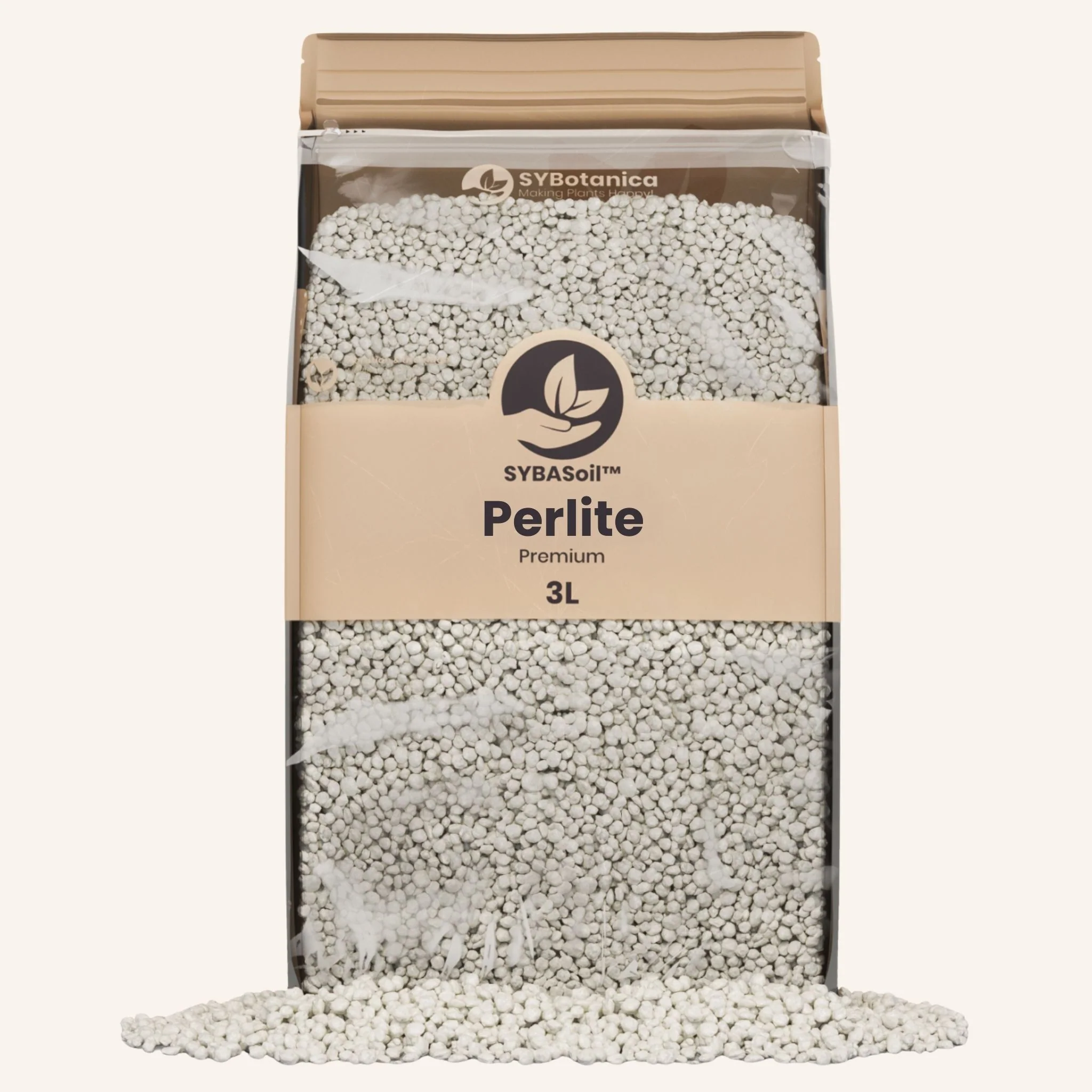
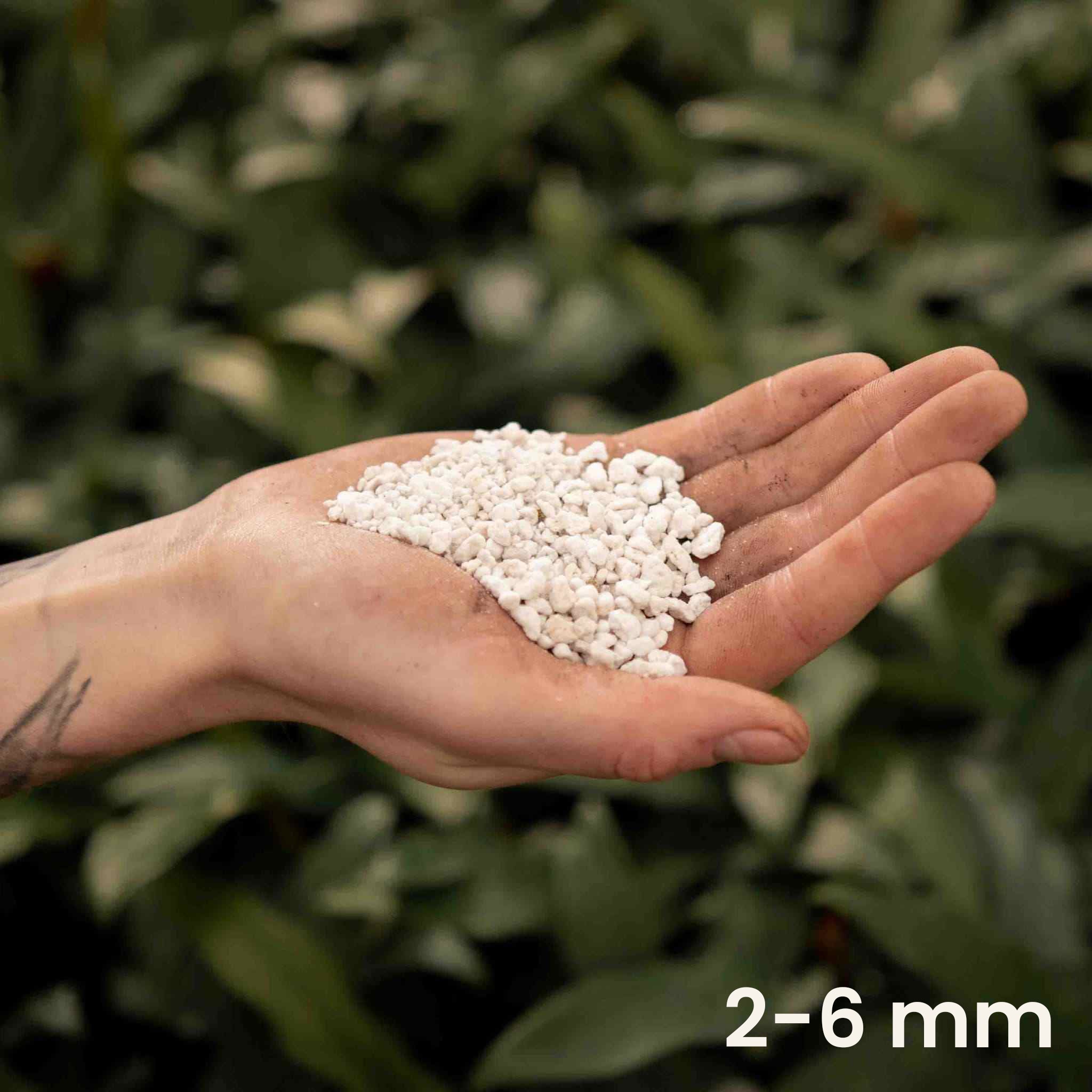
While both pumice and perlite are used to boost drainage, pumice is heavier, longer-lasting, and more mineral-rich. It stays in place during watering, won’t float to the top of pots, and won’t degrade with time. Its gritty, non-compacting nature means your indoor gardening substrate stays fluffy and well-drained with less frequent repotting.
Perlite is excellent for seedlings or propagation, but for mature plants with established root systems, pumice provides unmatched stability and aeration.
Decorative, Natural, and Endlessly Versatile
Besides its functional role in soil, pumice also works beautifully as a natural mineral top dressing. Spread it across the surface of your pots for a clean, modern look that also helps regulate evaporation and reduce fungus gnats. In terrariums, it blends well with bark, moss, and charcoal to create a gritty, breathable environment that won’t mold or collapse over time.
Because it’s a sustainable substrate with neutral pH and no chemical residue, pumice supports cleaner, healthier plant care practices from the ground up.
How to Use Pumice in Your Soil Mix
- For succulents and cacti substrates: Mix 30–60% pumice with base mix from SYBASoil for a dry, fast-draining blend.
- For root-heavy plants: Add 20–30% pumice to regular potting mix to prevent compaction.
- As a top layer: Spread a 1–2 cm layer of pumice on top of soil to retain surface moisture and discourage fungus gnats laying eggs.
- In terrariums: Combine with orchid bark, moss, and activated carbon carbon for added drainage and microbial control.
Because pumice is completely inert and mineral-based, it won’t interfere with your plant’s nutrient uptake or pH balance, making it an ideal root health booster for long-term use.
Sybotanica’s Take: Simple, Strong, and Made to Last
For us at Sybotanica, pumice is more than a soil additive—it’s one of the unsung heroes of healthy indoor growing. We love how it elevates soil mixes, especially for established plants that need support beneath the surface. We package our pumice in clean, resealable bags so it’s ready to use and easy to store between repottings.
Our soil philosophy is simple: make it breathable, natural, and built to last. That’s why pumice has a permanent place in our mix library—and why we recommend it to anyone looking to level up their soil game.
Product Information
Product Information
Shipping & Returns
Shipping & Returns



Pumice
Pumice
Pumice Improves Soil Aeration and Drainage for Root-Heavy and Arid Plants
Pumice is a naturally occurring porous stone formed from volcanic activity, and it’s one of the most effective and sustainable ways to improve soil aeration, drainage, and moisture balance. Whether you’re working with succulents, cacti, or large root systems, this lightweight soil amendment boosts structure and airflow in a way that organic matter alone cannot.
At Sybotanica, we source high-quality, coarse pumice that adds both form and function to your soil. Its long-lasting structure won’t compact or break down over time, making it the ideal choice for plants that require dry spells between watering. You can use it as a potting mix additive, a decorative top layer, or even as a clean terrarium element.
What Is Pumice, and Why Is It So Effective?
Pumice is a volcanic rock that’s light enough to float on water and porous enough to absorb and redistribute moisture slowly. It contains countless tiny cavities that store water and air, creating the perfect conditions for root oxygenation and moisture control. Its gritty texture also helps break up dense soils, making it invaluable for indoor plants prone to root rot or compacted substrates.
Benefits of Using Pumice in Plant Care:
- Enhances drainage improvement in heavy or moisture-retentive mixes
- Boosts root health with consistent aeration and airflow
- Retains moisture without causing soggy conditions
- Provides long-term structure that doesn't decompose
- Safe for all houseplants, especially succulents, cacti, and tropicals
- Doubles as a natural, decorative lightweight aggregate for top dressing
Whether you’re working with epiphytes in a bark-heavy mix or crafting the perfect blend for a monstera, pumice adds breathable body to the substrate without interfering with nutrient availability.
The Best Substrate for Large, Thirsty Roots
Some plants grow aggressively below the soil line, developing thick, vigorous roots that need room to expand and breathe. Pumice offers the texture and structure these roots crave—especially in older plants or species like snake plants, ZZ plants, and bird of paradise.
If you’ve dealt with compacted mixes, poor drainage, or stagnant pockets of moisture that lead to rot, you’ll find pumice to be an immediate and lasting solution. It allows water to move through the mix while also absorbing enough to create stable hydration—key for balanced moisture regulation.
Pumice vs. Perlite: What’s the Difference?
While both pumice and perlite are used to boost drainage, pumice is heavier, longer-lasting, and more mineral-rich. It stays in place during watering, won’t float to the top of pots, and won’t degrade with time. Its gritty, non-compacting nature means your indoor gardening substrate stays fluffy and well-drained with less frequent repotting.
Perlite is excellent for seedlings or propagation, but for mature plants with established root systems, pumice provides unmatched stability and aeration.
Decorative, Natural, and Endlessly Versatile
Besides its functional role in soil, pumice also works beautifully as a natural mineral top dressing. Spread it across the surface of your pots for a clean, modern look that also helps regulate evaporation and reduce fungus gnats. In terrariums, it blends well with bark, moss, and charcoal to create a gritty, breathable environment that won’t mold or collapse over time.
Because it’s a sustainable substrate with neutral pH and no chemical residue, pumice supports cleaner, healthier plant care practices from the ground up.
How to Use Pumice in Your Soil Mix
- For succulents and cacti substrates: Mix 30–60% pumice with base mix from SYBASoil for a dry, fast-draining blend.
- For root-heavy plants: Add 20–30% pumice to regular potting mix to prevent compaction.
- As a top layer: Spread a 1–2 cm layer of pumice on top of soil to retain surface moisture and discourage fungus gnats laying eggs.
- In terrariums: Combine with orchid bark, moss, and activated carbon carbon for added drainage and microbial control.
Because pumice is completely inert and mineral-based, it won’t interfere with your plant’s nutrient uptake or pH balance, making it an ideal root health booster for long-term use.
Sybotanica’s Take: Simple, Strong, and Made to Last
For us at Sybotanica, pumice is more than a soil additive—it’s one of the unsung heroes of healthy indoor growing. We love how it elevates soil mixes, especially for established plants that need support beneath the surface. We package our pumice in clean, resealable bags so it’s ready to use and easy to store between repottings.
Our soil philosophy is simple: make it breathable, natural, and built to last. That’s why pumice has a permanent place in our mix library—and why we recommend it to anyone looking to level up their soil game.
Original: $7.99
-70%$7.99
$2.40Product Information
Product Information
Shipping & Returns
Shipping & Returns
Description
Pumice Improves Soil Aeration and Drainage for Root-Heavy and Arid Plants
Pumice is a naturally occurring porous stone formed from volcanic activity, and it’s one of the most effective and sustainable ways to improve soil aeration, drainage, and moisture balance. Whether you’re working with succulents, cacti, or large root systems, this lightweight soil amendment boosts structure and airflow in a way that organic matter alone cannot.
At Sybotanica, we source high-quality, coarse pumice that adds both form and function to your soil. Its long-lasting structure won’t compact or break down over time, making it the ideal choice for plants that require dry spells between watering. You can use it as a potting mix additive, a decorative top layer, or even as a clean terrarium element.
What Is Pumice, and Why Is It So Effective?
Pumice is a volcanic rock that’s light enough to float on water and porous enough to absorb and redistribute moisture slowly. It contains countless tiny cavities that store water and air, creating the perfect conditions for root oxygenation and moisture control. Its gritty texture also helps break up dense soils, making it invaluable for indoor plants prone to root rot or compacted substrates.
Benefits of Using Pumice in Plant Care:
- Enhances drainage improvement in heavy or moisture-retentive mixes
- Boosts root health with consistent aeration and airflow
- Retains moisture without causing soggy conditions
- Provides long-term structure that doesn't decompose
- Safe for all houseplants, especially succulents, cacti, and tropicals
- Doubles as a natural, decorative lightweight aggregate for top dressing
Whether you’re working with epiphytes in a bark-heavy mix or crafting the perfect blend for a monstera, pumice adds breathable body to the substrate without interfering with nutrient availability.
The Best Substrate for Large, Thirsty Roots
Some plants grow aggressively below the soil line, developing thick, vigorous roots that need room to expand and breathe. Pumice offers the texture and structure these roots crave—especially in older plants or species like snake plants, ZZ plants, and bird of paradise.
If you’ve dealt with compacted mixes, poor drainage, or stagnant pockets of moisture that lead to rot, you’ll find pumice to be an immediate and lasting solution. It allows water to move through the mix while also absorbing enough to create stable hydration—key for balanced moisture regulation.
Pumice vs. Perlite: What’s the Difference?
While both pumice and perlite are used to boost drainage, pumice is heavier, longer-lasting, and more mineral-rich. It stays in place during watering, won’t float to the top of pots, and won’t degrade with time. Its gritty, non-compacting nature means your indoor gardening substrate stays fluffy and well-drained with less frequent repotting.
Perlite is excellent for seedlings or propagation, but for mature plants with established root systems, pumice provides unmatched stability and aeration.
Decorative, Natural, and Endlessly Versatile
Besides its functional role in soil, pumice also works beautifully as a natural mineral top dressing. Spread it across the surface of your pots for a clean, modern look that also helps regulate evaporation and reduce fungus gnats. In terrariums, it blends well with bark, moss, and charcoal to create a gritty, breathable environment that won’t mold or collapse over time.
Because it’s a sustainable substrate with neutral pH and no chemical residue, pumice supports cleaner, healthier plant care practices from the ground up.
How to Use Pumice in Your Soil Mix
- For succulents and cacti substrates: Mix 30–60% pumice with base mix from SYBASoil for a dry, fast-draining blend.
- For root-heavy plants: Add 20–30% pumice to regular potting mix to prevent compaction.
- As a top layer: Spread a 1–2 cm layer of pumice on top of soil to retain surface moisture and discourage fungus gnats laying eggs.
- In terrariums: Combine with orchid bark, moss, and activated carbon carbon for added drainage and microbial control.
Because pumice is completely inert and mineral-based, it won’t interfere with your plant’s nutrient uptake or pH balance, making it an ideal root health booster for long-term use.
Sybotanica’s Take: Simple, Strong, and Made to Last
For us at Sybotanica, pumice is more than a soil additive—it’s one of the unsung heroes of healthy indoor growing. We love how it elevates soil mixes, especially for established plants that need support beneath the surface. We package our pumice in clean, resealable bags so it’s ready to use and easy to store between repottings.
Our soil philosophy is simple: make it breathable, natural, and built to last. That’s why pumice has a permanent place in our mix library—and why we recommend it to anyone looking to level up their soil game.